Prepare the civilian side of a siege
In Fortress mode a siege is an announced invasion. Thieves, a small ambush and a visiting megabeast are different encounters. A warning at the edge can be brief. Look first for fishers, gatherers, animal keepers and citizens carrying objects to refuse piles. Their jobs have a way of leading towards the exact square you wanted everyone to avoid.
Plan a protected indoor area, a route into it and a dwarf able to operate the entrance. Give the interior usable food, drink, water and working space. An indoor burrow or the equivalent civilian controls in your edition can help restrict work. Check who was already outside and what tasks are still active. An order is only helpful when the affected citizen has time and a path to obey it.
A squad is a group of actual workers
Choose a commander, make a squad, assign equipment, give it somewhere to train and read its schedule. A dwarf taken off the brewing shift leaves a real vacancy. Training an entire small fort simultaneously can make a quiet season more dangerous than the next siege. Check what each member actually picked up. Equipment still on a workshop floor does little for someone at a station.
| Order or place | What to check in play |
|---|---|
| Barracks | Is the intended squad assigned to the place for training? Is its schedule asking it to train now? |
| Uniform | Are the pieces available, suitable and actually worn? A written assignment is only the first step. |
| Station | Can the squad reach the marked tile while the civilians can still get inside? |
| Off duty | Can the members return to food, drink and ordinary needs? Who takes the next watch? |
| Hospital | Can haulers reach beds and fresh water without crossing the closed entrance? |
Forty-d used drafting, an active or inactive state and a different squad interface. Soldiers could be given orders about provisions and changes of equipment. A change of role did not instantly deliver the right gear. That lesson survives the menus. Follow one newly assigned dwarf through the whole change of duty before repeating the arrangement for ten.
What a gate reveals in a practice run
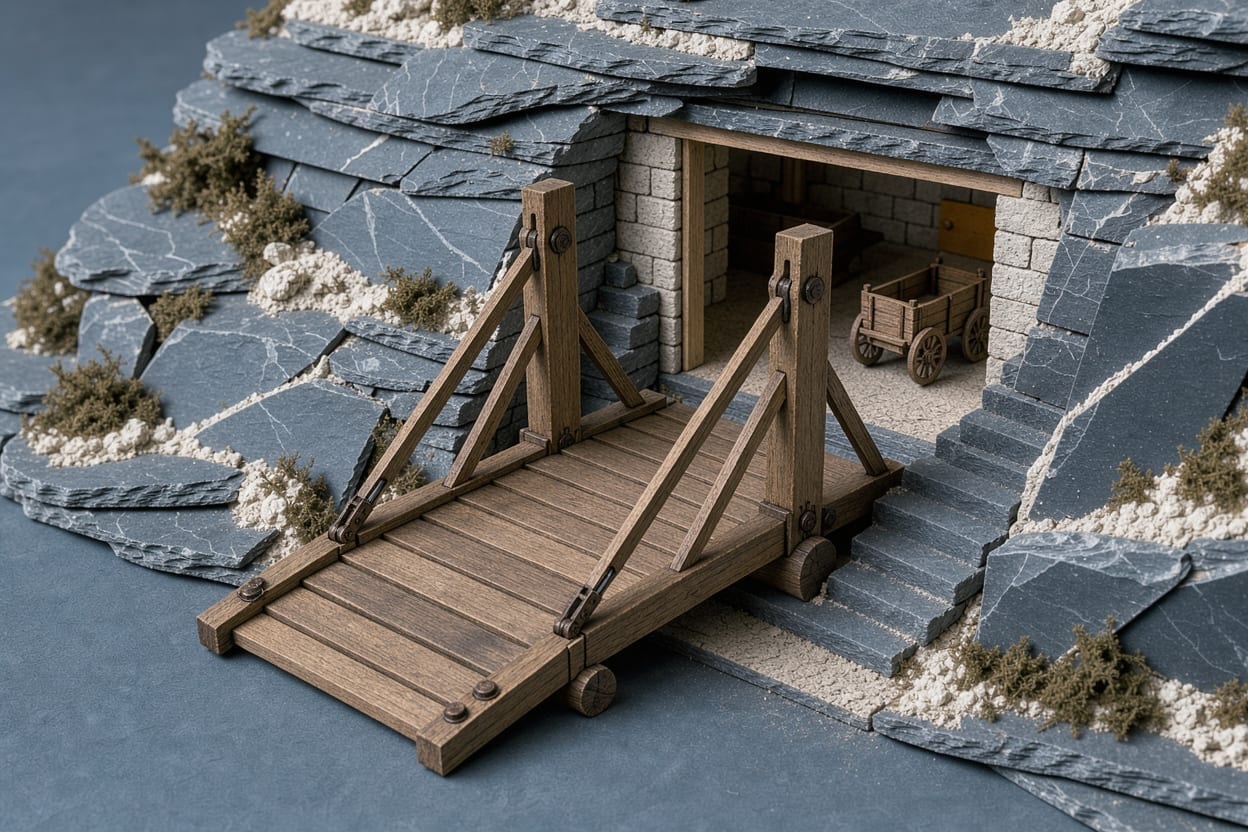
A raising bridge can close a passage when it fits the opening. A retracting span leaves a gap. Test which motion your bridge performs while its footprint is clear. Confirm who can reach the lever with the gate open and with the gate closed. Give livestock a place on the correct side. Check for another entrance on a different elevation, particularly after a new cavern breakthrough.
The game offers stone-fall, cage and other traps as constructed map objects. A cage trap requires an available cage and work to put it back in service afterwards. Some creatures bypass traps. A floor of traps therefore has maintenance jobs and limits as well as a footprint. Count the haulers going to service that corridor before treating the entire approach as closed.
Wait out the interruption
Read the invaders’ positions and the fort’s priorities as the siege develops. A settlement with a working farm, stores and water indoors can let time pass behind its gate. If the barrels are still on the wagon outside, count only the food and drink the dwarves can reach. Delay routine outdoor collection until the route is clear. Afterwards, inspect casualties, civilian assignments, doors, bridges, supplies and squad schedules before unpausing a mountain of suspended work. Check where unfinished jobs will send civilians before reopening the gate.
Read the kind of visitor in 40d
A siege announced an organised force at the map edge. Goblin siegers, a hostile human force, elven hostility and other visitors had different relationships with the fort. Kobold thieves and small ambush parties often first showed themselves when a dwarf or a dog noticed them. A creature marked as a megabeast was another event again. The front door could be the same for all three and the announcement could be quite different.
The training, equipment and supply pages treated an active soldier as a dwarf with needs. Someone given an order to change weapons still had to pick up the appropriate item. A squad waiting at a station could have a canteen and backpack problem when the road home closed. Inspect the individual and their inventory before interpreting a formation drawn on a map as a ready squad.