Deep Ledger
An independent guide to Dwarf Fortress, written for players who want to understand why things happen, not just which button to press.
Deep Ledger is an independent fan guide, not the official wiki and not connected to the game's makers. For exact, current, version-by-version detail, the official community reference lives at dwarffortresswiki.org.
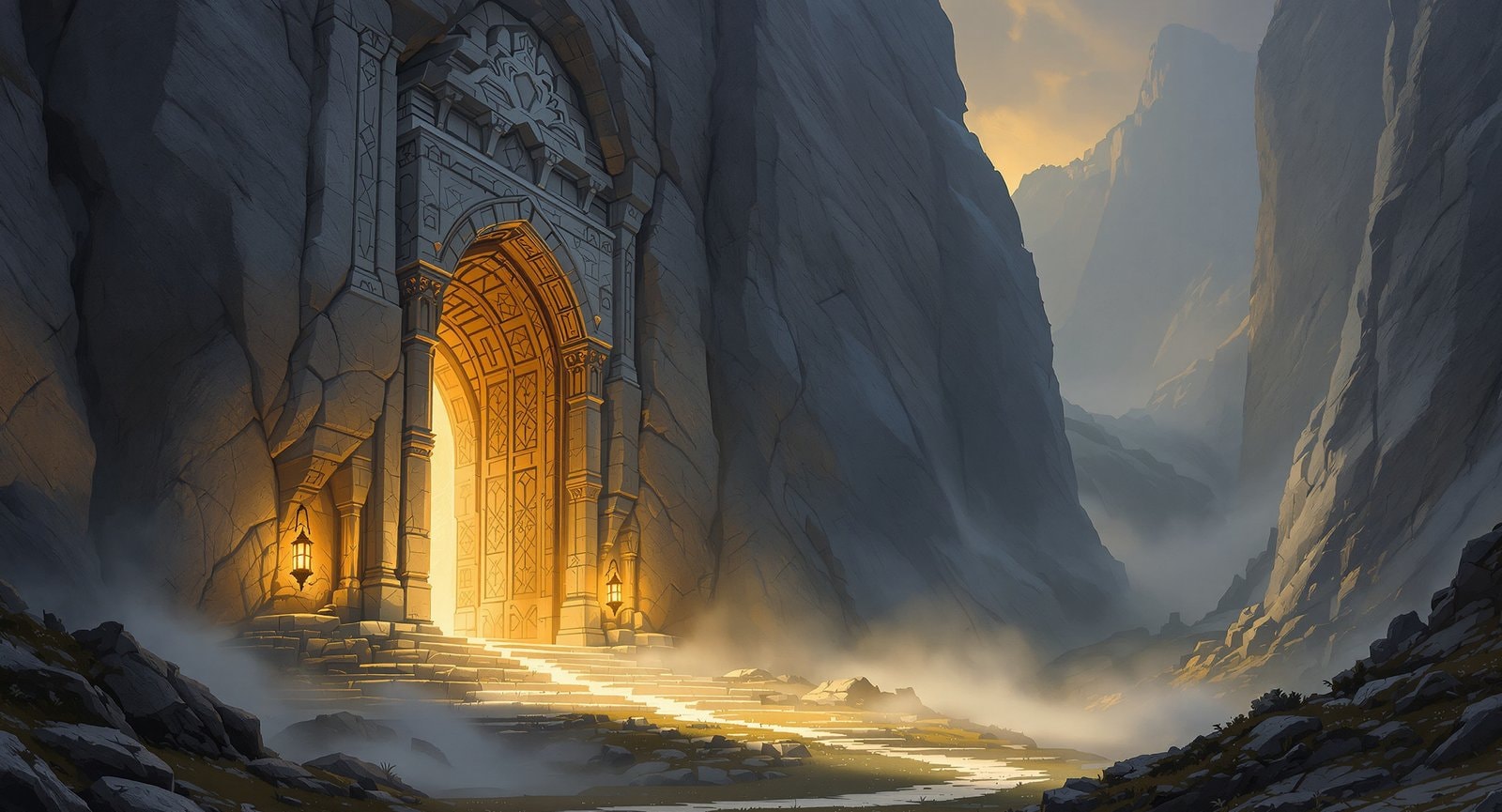
Dwarf Fortress is a construction and management game in which you guide a small band of dwarves as they carve a home out of a mountain, and then watch that home succeed, struggle and, sooner or later, collapse in some spectacular way. Wikipedia's article on the game describes it as a construction and management simulation and roguelike made by Bay 12 Games, first released as a free public alpha in 2006.
You never control a dwarf directly. You mark stone to be dug, place workshops, set up stockpiles and give orders, and the dwarves decide for themselves when and how to carry them out. Each one has a personality, friendships, grudges, favourite materials and a memory of every bad meal. Around them the game runs a whole simulated world with its own history, so the goblins at your gate belong to a real civilisation with real reasons to hate you.
The game has been around a long time, but it is not a museum piece. The Steam store page lists the current commercial edition, with graphics and a reworked interface, as released on 6 December 2022, while Bay 12 Games' page for the game still offers the classic version for download. The official community wiki presents itself as a body of guides and advice contributed by players, and remains the place to check exact numbers.
Who this guide is for
Deep Ledger is for the player who has opened the game, stared at a screen full of symbols or tiny pictures, and wondered where on earth to begin. It is also for the player who has lost three fortresses and would like the fourth to last a little longer, and for anyone curious about why so many people talk about this game with the fondness usually reserved for an old friend who once set the kitchen on fire.
Every page here explains a concept rather than a keystroke. The game's menus and controls have changed between releases, so this guide talks about what things are and why they behave the way they do: why water is a tool and a threat, why an aquifer stops your pick, why a dwarf who has not slept properly in weeks is a problem for everyone near him. When you need the exact menu, value or recipe for your version, the official wiki is the right tool, and the pages below say so where it matters.
If you are brand new, start with your first fortress and the common questions page, then read losing is fun before your first disaster rather than after it. If you already know your way around a workshop, jump straight to water, magma or dwarven computing and enjoy yourself.
How the guide is organised
The pages fall into six groups. Start covers the first hours and the mindset the game rewards. Look and tools deals with how the game is drawn and the community tools around it. Building is about stone, fluids, machinery and layout. Dwarves is about the people themselves and what keeps them fed, busy and sane. The world looks outward, to armies, traders, history and adventure. About covers the game's makers, a page on how the game models injury and the real anatomy behind it, and a note on this guide.
Start
- StartYour first fortress
Picking a site, digging in and surviving the first winter.
- StartCommon questions
Straight answers to what confuses almost every new player.
- StartLosing is fun
Why fortresses fall, and why the community cheers when they do.
- StartStories and challenges
Succession games, self-imposed rules and writing up your own fort.
Look & tools
- Look & toolsGraphics sets
How players swapped letters for pictures, and what came after.
- Look & toolsTilesets and colours
Character grids, tile shapes and colour schemes you can read.
- Look & toolsPerformance
Why big forts crawl and the habits that keep them moving.
- Look & toolsUtilities and tools
The kinds of community tools players lean on, used sensibly.
- Look & toolsDwarven computing
Logic gates built from levers, water and very patient animals.
Building
- BuildingMechanisms and power
Levers, bridges, floodgates, gears and the power to turn them.
- BuildingWater, wells and pumps
Wells, pumps, muddy farm plots and floods you did not plan.
- BuildingDigging, aquifers and caverns
Stairs, cave-ins, water-bearing layers and the caverns below.
- BuildingMagma and forges
Fuel-free furnaces, magma-safe materials and fire safety.
- BuildingStone, ore and metal
Rock layers, ores, smelting, alloys, gems and glass.
- BuildingRooms and layout
Bedrooms, halls, stockpiles and short walks between them.
- BuildingMegaprojects
Towers, walls and mountains reshaped over years of play.
Dwarves
- DwarvesFarming, food and drink
Underground crops, brewing, butchery and a reserve for bad years.
- DwarvesAnimals, cats and carp
The infamous carp, runaway cats and the creatures worth fearing.
- DwarvesStrange moods
When a dwarf seizes a workshop to make one legendary thing.
- DwarvesNeeds and happiness
Personalities, stress, nobles and how spirals start.
- DwarvesSkills and labours
Learning by doing, specialists, workshops and craft chains.
The world
- The worldMilitary and defence
Squads, sieges, walls, drawbridges and trap corridors.
- The worldTrade and the economy
Caravans, the depot, the broker and what visitors want.
- The worldWorld generation and legends
Every world arrives with its own history, peoples and myths.
- The worldAdventure mode
Walking a made world as a single hero, fortress ruins included.
- The worldModding
The editable text files that define creatures and materials.
About
- AboutAbout the game
The developers, the long free alpha and the modern edition.
- AboutWounds and anatomy
How the game models the body, and the real tissues behind it.
- AboutAbout Deep Ledger
What this guide is, what it is not, and how it is written.